Earth Day 2026: How YVR, MUC, PIT and YEG are scaling sustainability through innovation, energy transition and collaboration
The following article was published by Future Travel Experience
In this deep-dive, published to coincide with Earth Day 2026, a series of in-depth interviews with YVR, MUC, PIT and YEG explores how airports are advancing sustainability through innovation, and turning ambition into tangible action.
Sustainability remains a defining force in air transport innovation, as the global industry accelerates toward its net-zero carbon emissions target by 2050. It also features in FTE’s ‘12 technology and CX trends set to enhance airline and airport operations in 2026’. In this deep-dive, published to coincide with the recent Earth Day 2026, a series of in-depth interviews with Vancouver Airport Authority, Munich Airport, Pittsburgh International Airport and Edmonton International Airport explores how airports are advancing sustainability through innovation. Their insights align closely with the Earth Day 2026 theme – ‘Our Power, Our Planet’ – underlining the industry’s growing capacity to turn ambition into tangible action.
YVR: Accelerating sustainable innovation through partnerships



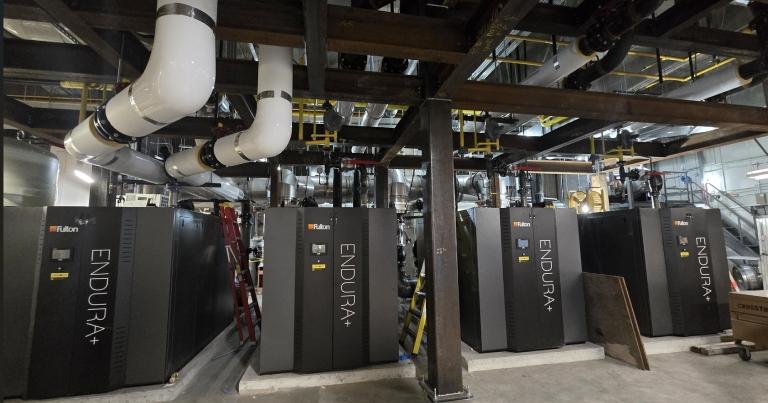
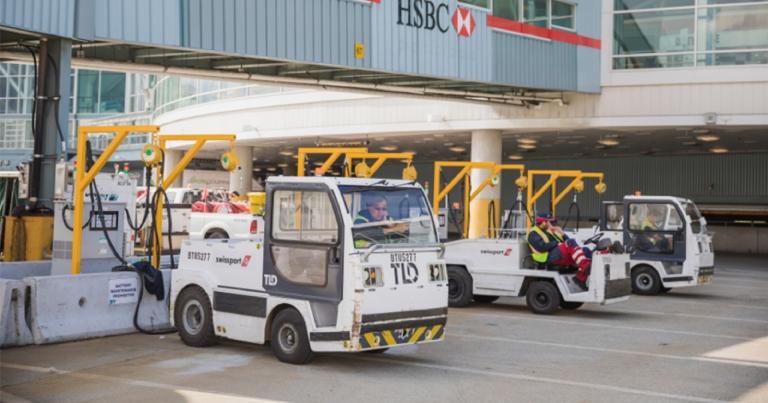

Innovation is a key enabler for Vancouver International Airport (YVR) – a Corporate Partner of the FTE Digital, Innovation & Startup Hub – and collaboration with government and industry acts as a critical accelerator. “Through partnerships with Innovate BC and the Government of British Columbia’s Integrated Marketplace program, YVR connects local companies to real operational challenges, piloting and scaling solutions in a live airport environment,” says Wendy Avis, Director, Climate and Environment, Vancouver Airport Authority. “Current initiatives include collaborations with BC-based companies such as Tap & Go and Moment Energy. These projects advance EV charging infrastructure with improved data visibility, carbon credit reporting, bi‑directional charging capabilities, and explore second‑life battery applications as part of YVR’s long-term energy strategy.”
YVR’s operational climate goal is net-zero greenhouse gas emissions by 2030. Key initiatives include:
- Transitioning fleet vehicles to electric and hydrogen alternatives.
- Installing an air-source heat pump to provide hot water, reducing emissions by approximately 100 tonnes annually.
- Replacing boilers with modern, high-efficiency units.
- Planning one of Canada’s largest geo-exchange systems to heat and cool the terminal – BC’s largest building – saving an estimated 4,800 tonnes of emissions per year.
- Using renewable natural gas and renewable diesel where fossil fuels cannot yet be fully eliminated.
YVR also collaborates with airlines and partners to reduce broader aviation impacts:
- Delivering North America’s only low‑carbon jet fuel incentive program, reducing emissions by 61,000 tonnes over the past two years.
- Providing extensive electric ground support equipment (eGSE) charging.
- Equipping all gates with ground power and pre‑conditioned air.
- Using Oscar, an AI-powered waste sorting assistant, to improve passenger waste behaviour.
- Running the annual Waste Wars competition to incentivise proper waste sorting among food & beverage vendors.
- Partnering with ChopValue to divert over 1.5 million chopsticks from landfill, equivalent to over 77 tonnes of avoided emissions. The chopsticks are transformed into useful items, tables and counters.
- Applying Digital Twin and Deep Turnaround insights to reduce aircraft ground time, idling, and emissions.
Avis explains that YVR has two primary sustainability objectives for its own operations:
- “Net-zero greenhouse gas emissions by 2030, achieved in collaboration with utility providers and provincial and federal governments.”
- “Zero waste by 2040, supported through partnerships with waste haulers, janitorial teams, retail tenants, and food & beverage operators.”

“YVR also works with local innovators such as Intuitive AI and ChopValue to implement circular economy solutions,” Avis shares. “To support aviation decarbonisation, airlines and fuel suppliers are critical partners, alongside ground handlers, concessions, taxis, rideshare operators, and all levels of government.”
Data and digital tools are essential to measuring and improving environmental performance. YVR uses sensor-based technology and dashboards to monitor electric ground support equipment charging patterns, enabling more efficient operations.
“Through Digital Twin technology and the Deep Turnaround program – developed in partnership with Schiphol Airport – YVR is exploring improved visibility into aircraft emissions, including acoustic monitoring of APU usage,” says Avis. “Over time, these systems will contribute to a more integrated, data‑driven emissions management approach. YVR has also conducted detailed waste audits across key facilities, using the findings to optimise waste operations and test new diversion strategies aligned with its zero‑waste goal. Oscar, YVR’s AI-powered waste sorting assistant, tracks sorting behaviour and identifies top contaminants. In 2025, Oscar assisted with sorting over 94,000 items, highlighting ongoing opportunities to improve waste education and diversion performance.”
Looking ahead, Avis adds that airports must be prepared to support the aviation industry’s net-zero by 2050 commitment. “Sustainable Aviation Fuel will remain critical, alongside investment in electrical capacity and infrastructure. Increasingly, airports will function as energy hubs, supporting renewable electricity, low-carbon fuels, and emerging energy vectors such as hydrogen. At YVR, the formation of an Energy Advisory Council – comprised of six global energy experts – supports long‑term planning for aviation and infrastructure energy solutions on Sea Island.”
Munich Airport leveraging AI and smart energy management to achieve Net Zero 2035

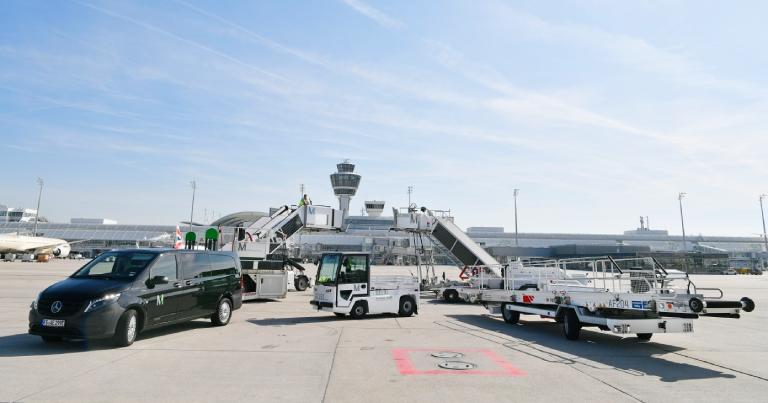
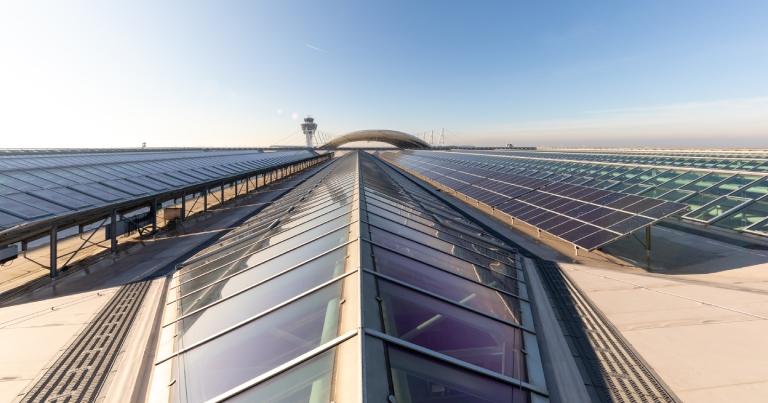

Munich Airport – a Corporate Partner of the FTE Digital, Innovation & Startup Hub – is deploying and piloting innovative technologies to achieve its Net Zero 2035 target. Key measures include the expansion of onsite renewable energy (especially photovoltaic systems), long-term green power purchase agreements, and systems combining solar, wind and battery storage for resilient, low-carbon energy supply.
The airport is also electrifying its ground operations, exploring hydrogen solutions for future airside and mobility applications, and using digital technologies such as smart energy management, the Internet of Things (IoT) and data-driven optimisation to reduce resource consumption and emissions across buildings and infrastructure.
“Munich Airport’s core sustainability objective is to achieve net-zero emissions for its own operations (Scope 1 and 2) by 2035, while continuously reducing environmental impacts related to energy use, ground operations, buildings, mobility, and resource management,” explains Dr Jan-Henrik Andersson, Chief Commercial and Security Officer (including IT/Digital and Technology), Munich Airport. “Key priorities include expanding renewable energy supply, increasing energy efficiency, decarbonising the airport vehicle fleet, and enabling climate‑friendly aviation through infrastructure readiness for sustainable fuels and new propulsion technologies.”

To achieve these objectives, Munich Airport works closely with a wide range of industry stakeholders and partners. Collaboration includes airlines, ground handlers, energy providers, technology companies, innovative scale-ups, research institutions and public authorities. “Examples include long‑term partnerships for green electricity supply, joint pilot projects on hydrogen and electric ground operations, and cooperation with airlines and fuel suppliers to enhance the use of Sustainable Aviation Fuels (SAF),” Andersson shares. “In addition, Munich Airport acts as an innovation platform through initiatives like the LabCampus innovation hub. There, startups, academia and established companies co‑develop and test digital, data‑driven and sustainable solutions under real airport conditions. Through these collaborations, Munich Airport not only reduces its own emissions but also contributes to scaling sustainable solutions across the wider aviation ecosystem.”
Data, digital tools and artificial intelligence (AI) play a key role in optimising operations and reducing environmental impact at Munich Airport. “Smart energy management systems, for example, use real‑time data, predictive analytics and weather forecasts to optimise heating, cooling, lighting and ventilation in terminals and buildings,” says Andersson. “This significantly improves energy efficiency and reduces CO₂ emissions.”
A key recent initiative at Munich Airport is the conclusion of a long‑term Power Purchase Agreement (PPA) for offshore wind energy. In February 2026, Munich Airport signed a ten‑year PPA securing around 40 GWh of electricity per year from a new offshore wind farm in the North Sea that will go into operation early 2027. The amount of energy generated would be enough to supply an estimated 12,000 households with green electricity each year. This volume covers a significant share of the airport’s electricity demand and directly reduces Scope 2 CO₂ emissions by replacing conventional power with certified renewable energy. “The agreement provides long‑term price stability, increases energy security and makes a measurable contribution to Munich Airport’s Net Zero 2035 pathway, demonstrating how structural changes in energy procurement can deliver immediate and tangible environmental benefits,” Andersson explains.
Over the next five to ten years, the key sustainability priorities for airports will be decarbonisation, operational efficiency and enabling sustainable aviation. Andersson highlights that airports must speed up their transition to net‑zero operations by expanding renewable energy, electrifying vehicles and ground equipment, and using smart energy management to reduce consumption while ensuring operational resilience. “At the same time, airports will increasingly enable sustainable aviation by investing in infrastructure for Sustainable Aviation Fuels (SAF) and preparing for electric and hydrogen-powered aircraft. Finally, digitalisation and collaboration will be critical. Data, AI and automation help optimise energy use, traffic flows and asset management, while close cooperation with airlines, energy providers, regulators and local communities will be essential to scale solutions and support long‑term growth and acceptance.”
Hear more from Munich Airport at the co-located APEX FTE EMEA and APEX FTE Ancillary & Retailing events, taking place in Dublin on 9-11 June 2026. Jan-Henrik Andersson, Chief Commercial Officer, Munich Airport, is participating in a session focused on ‘Commercial collaboration: embracing innovation and collaboration to create new revenue streams for airlines, airports and their partners’ with the ‘Exclusive launch of the Commercial Collaboration Playbook, delivered by FTE in partnership with Munich Airport and partners’. Meanwhile, Vera Jakobsen, Vice President Digital, Munich Airport, is speaking in a session focused on ‘Making the autonomous ramp a reality: lessons learned, opportunities and challenges’.
Register for the co-located APEX FTE EMEA and APEX FTE Ancillary & Retailing events – free for airlines, low-cost for airports >>PIT: Pioneering onsite SAF production and data-driven environmental intelligence
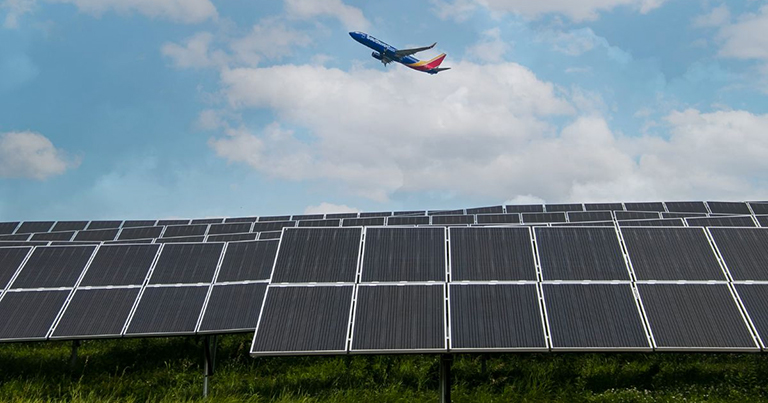
Pittsburgh International Airport’s (PIT) sustainability strategy is built on the belief that airports can be resilient and proactive participants in the green economy. One major pathway is the development of the first onsite, on-airport Sustainable Aviation Fuel (SAF) production facility in the United States. “The facility will convert renewable bio-based feedstocks into a ‘drop-in’ fuel that is chemically identical to traditional jet fuel but with a carbon intensity that is at least 50% lower,” says Chad Willis, VP, Planning, Environmental, & Sustainability, Pittsburgh International Airport. “By producing the fuel right here on PIT’s campus, we eliminate the emissions and costs associated with long-distance fuel transport, providing a reliable, local, cost-effective green solution for our airline and cargo partners. This will also further diversify the region’s energy portfolio, strengthening regional resilience.”
The primary objective of PIT – a Corporate Partner of the FTE Digital, Innovation & Startup Hub – is to reach net-zero by 2050, with an interim goal of achieving Airport Carbon Accreditation (ACA) Level 4 by 2030. “This includes a goal to have all new buildings be net-zero by 2030 and a 50% reduction in energy use intensity for existing structures,” Willis explains. “We work closely with Airports Council International (ACI) and the Pittsburgh 2030 District to align our reporting and verification with global standards.”
PIT is developing environmental infrastructure in ArcGIS to show how assets behave and to see how operational decisions impact environmental systems. “These initiatives represent a shift from mapping assets to activating intelligence,” Willis shares. “Rather than relying solely on static maps or post-event analysis, it will provide dynamic visibility into how operational activities interact with environmental infrastructure. Allegheny County Airport Authority (ACAA) is creating a smarter, transparent, and sustainable operating environment. It’s a critical step forward in aligning operational excellence with environmental responsibility, and a tangible advancement in building our airport’s digital twin. The digital twin allows us to test and refine operations before implementing changes, helping to reduce energy consumption and improve overall sustainability.”

The airport’s Terminal Modernization Program is delivering immediate, tangible benefits through its pursuit of LEED Gold and Parksmart certifications. During construction, ACAA achieved a remarkable 99% waste diversion rate for the terminal, ensuring nearly all debris was recycled or reused rather than sent to a landfill. “The new terminal is engineered to operate 30% more efficiently than standard building codes, utilising advanced HVAC systems and daylight-responsive LED lighting to drastically reduce overall energy intensity,” says Willis. “Additionally, as the terminal is connected to the onsite microgrid, this high-efficiency building operates on locally generated energy.”
The most important sustainability priorities for airports like PIT will centre on three interconnected areas: scaling SAF, becoming a clean energy hub, and fully electrifying ground operations. “First, airports are evolving from passive energy consumers into active energy producers and distributors,” Willis shares. “For a site like PIT with available land and an existing microgrid, this means expanding renewable generation, integrating storage, and positioning the airport as a regional node for emerging fuels like SAF and potentially hydrogen. This shift is critical because the broader decarbonisation of aviation will depend heavily on the infrastructure airports can provide, not just what happens in the air.”
Enabling the widespread adoption of SAF creates a key opportunity to leverage regional feedstocks and existing energy expertise to support fuel production, storage, and distribution. At the same time, transitioning ground operations offers some of the most immediate and practical emissions reductions. “While full electrification of ground support equipment, fleets, and gate infrastructure is the long-term goal, alternative fuels like renewable diesel can play an important near-term role, especially for heavier equipment,” Willis adds. “Taken together, pairing these strategies with onsite clean energy creates a more flexible, phased approach that reduces operational emissions now while positioning the airport as a resilient, forward-looking energy and transportation hub.”
YEG: Embedding sustainability across strategy, operations and partnerships
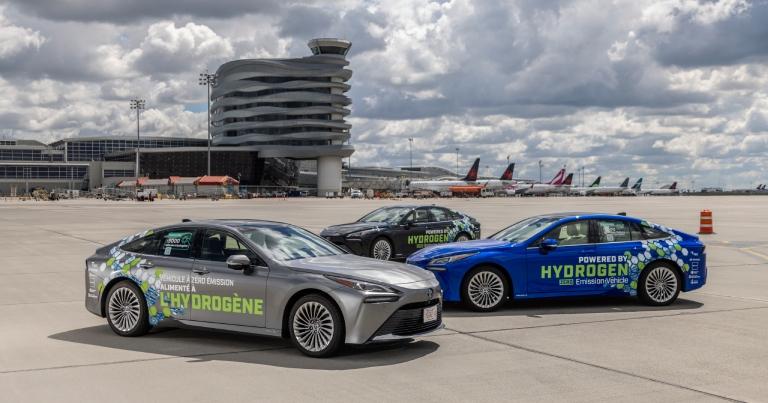


Edmonton International Airport (YEG) is focusing on solutions that are both pragmatic and scalable within its regional context. “One of our most distinctive areas of exploration is hydrogen, leveraging our location within one of the world’s leading hydrogen ecosystems,” begins Marion N. Chivot-Legris, Director, Sustainability Strategy, Edmonton International Airport. “We see strong potential for hydrogen to support regional aviation and ground operations over time. We are also exploring the role that airports can play in the Sustainable Aviation Fuel (SAF) journey, recognising the importance of enabling access and demand aggregation, even if production and supply chains still need development in Canada.”
Beyond fuels, YEG is also looking at how infrastructure planning can be “future-ready” – ensuring that decisions it makes today on assets, land use and partnerships don’t lock the airport out of lower-carbon solutions tomorrow. The focus is less on adopting technology for its own sake, and more on creating the conditions for deployment at scale.
“We recognise that our sector is a hard-to-abate one,” says Chivot-Legris. “Our core objective so far has been to build a credible and actionable path to net-zero, while ensuring that sustainability is integrated into how the airport operates and grows. We believe that airports cannot achieve this in isolation. At YEG, collaboration is central – whether with airlines, energy providers, government or industry partners. For example, advancing hydrogen or SAF requires alignment across the value chain, not just within airport boundaries. We are also working internally to better connect sustainability with enterprise risk management, operations and commercial strategies. Externally, we aim to play a convening role, bringing key partners together to align on realistic, regionally relevant solutions rather than one-size-fits-all approaches.”

YEG is still in the early stages of strengthening its data foundations, and Chivot-Legris believes one of the biggest opportunities lies in improving how the airport collects, structures and shares environmental data across the airport ecosystem. “A lot of that data sits with different departments, so a key focus right now is building more reliable GHG emissions inventories and clearly identifying gaps and ownership,” Chivot-Legris explains. “I see this as a critical enabler before we can realistically scale more advanced tools, including AI.”
More broadly, as a sustainability practitioner, Chivot-Legris believes the sustainability sector is at the beginning of a real shift, where digital tools can move from static reporting to much more dynamic, decision-ready insights. “The potential is significant in areas like climate scenario modelling, forecasting and managing complex transitions such as climate resilience, energy systems or fleet evolution. But from my experience, the impact really depends on getting the fundamentals right first, building robust data, ensuring consistency and connecting sustainability to core operational and financial decisions. Once that’s in place, digital becomes a powerful lever to make sustainability more forward-looking and actionable.”
While many of the airport’s current efforts are focused on building the foundation for larger-scale impact, YEG is starting to integrate more tangible actions into its approach. “One example is our partnership with veritree, to support reforestation in Alberta, including areas impacted by wildfires,” Chivot-Legris shares. “While not a substitute for emissions reductions, this initiative contributes to local ecosystem restoration and reflects our broader commitment to environmental stewardship. What differentiates veritree is the level of transparency, traceability and accountability embedded in the model. Projects are tracked from planting through their growth cycle using blockchain verification, satellites, drones and on-the-ground data collection. Reporting covers survival rates, biodiversity and carbon impact. This approach addresses common challenges in nature-based solutions, such as verification and double counting, and provides a higher level of confidence in outcomes.”
More broadly, YEG’s work over the past year has been about moving from ambition to structure, clarifying targets, strengthening governance and identifying where the most meaningful impact can be achieved. This groundwork is essential to ensure that future initiatives deliver measurable and credible results.
Over the next decade, the priority for airports will be moving from commitments to execution, turning net-zero ambitions into operational reality. “This includes accelerating access to low-carbon fuels like SAF and hydrogen, but also addressing the less visible challenges: infrastructure readiness, financing and regulatory alignment,” Chivot-Legris explains. “Equally important will be data transparency and accountability, being able to clearly track progress and make informed decisions in a complex, multi-stakeholder environment.”
At the same time, Chivot-Legris highlights that climate resilience will need to move to the forefront of airport strategy. “Airports are highly exposed to physical climate risks, from extreme weather and temperature variability to flooding and wildfire impacts. Strengthening infrastructure resilience, integrating climate risk into enterprise risk management, and planning for operational continuity under changing climate conditions will be essential. Finally, airports will need to redefine their role not just as infrastructure providers, but as ecosystem shapers. The ability to convene partners, align incentives and enable scalable solutions will be critical to achieving meaningful progress.”
From ambition to action: Airports redefining their role in a net-zero future
Taken together, these perspectives highlight a clear shift underway across the global air transport industry. Airports are no longer simply infrastructure providers – they are becoming active enablers of decarbonisation, energy transition and system-wide innovation.
From Vancouver’s partnership-led approach and Munich’s focus on integrated energy systems, to Pittsburgh’s emergence as a clean energy hub and Edmonton’s emphasis on building credible, scalable foundations, a common thread emerges: sustainability is no longer a standalone initiative. It is increasingly embedded across operations, investment strategies and ecosystem collaboration.
What is equally clear is that progress will depend on more than individual action. The scale and complexity of aviation’s decarbonisation challenge demand deeper coordination across airlines, airports, energy providers, technology partners and governments. Whether advancing Sustainable Aviation Fuel, preparing for hydrogen, electrifying ground operations or strengthening data capabilities, success will hinge on aligned, system-level thinking.
For industry leaders focused on passenger experience, operational efficiency and digital transformation, this transition also presents a significant opportunity. Smarter energy management, data-driven decision-making and more resilient infrastructure are not only reducing environmental impact – they are enabling more efficient, reliable and future-ready airport operations.
As the industry moves beyond ambition towards execution, the role of the airport is being redefined. The next decade will be shaped by those that can translate strategy into scalable solutions, turning innovation into measurable impact. In that journey, the ability to convene partners, harness data and invest in the right infrastructure will be critical to delivering a net-zero future for aviation.
You may also be interested in
12 technology and CX trends that can enhance airline and airport operations in 2026
12 innovations that have the potential to enhance CX and future-proof airport operations
Article originally published here:
Earth Day 2026: How YVR, MUC, PIT and YEG are scaling sustainability through innovation, energy transition and collaboration
from Future Travel Experience https://ift.tt/qDwHWeV
Comments
Post a Comment