SimpliFlying Founder & CEO discusses how agentic AI will reshape airline retailing and determine which offers reach travellers
The following article was published by Future Travel Experience
SimpliFlying Founder & CEO Shashank Nigam shares how agentic AI will fundamentally reshape airline distribution, determining which carriers reach travellers first and which offers are surfaced, or ignored, by autonomous digital agents.
During a compelling keynote session at APEX FTE EMEA and Ancillary & Retailing 2026 in Dublin, SimpliFlying Founder & CEO Shashank Nigam focused on ‘Can AI make flying magical again?’ He emphasised that agentic AI will fundamentally reshape airline distribution, determining which carriers reach travellers first and which offers are surfaced, or ignored, by autonomous digital agents.
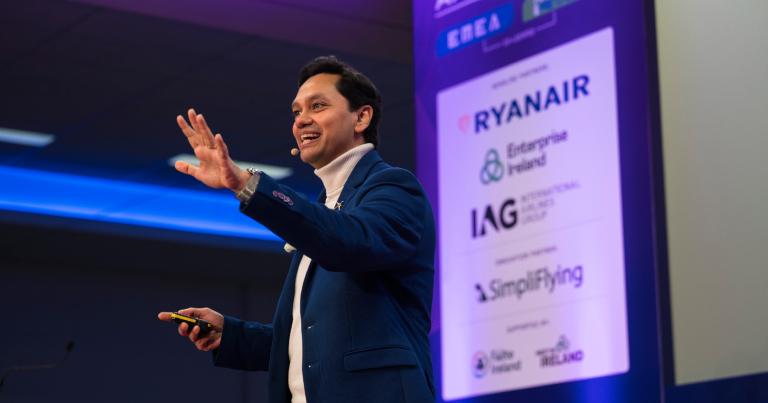
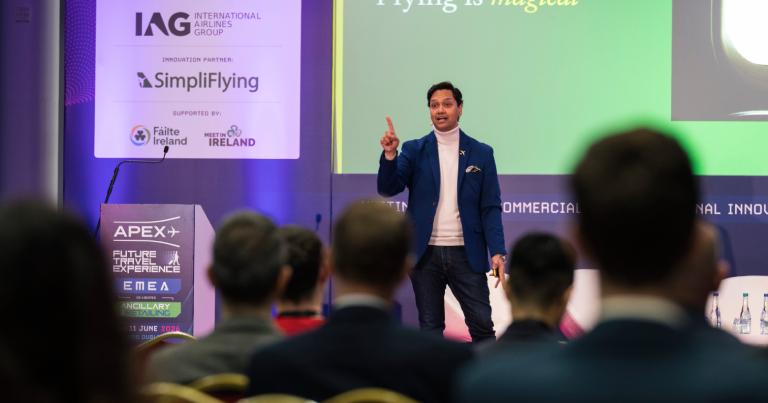
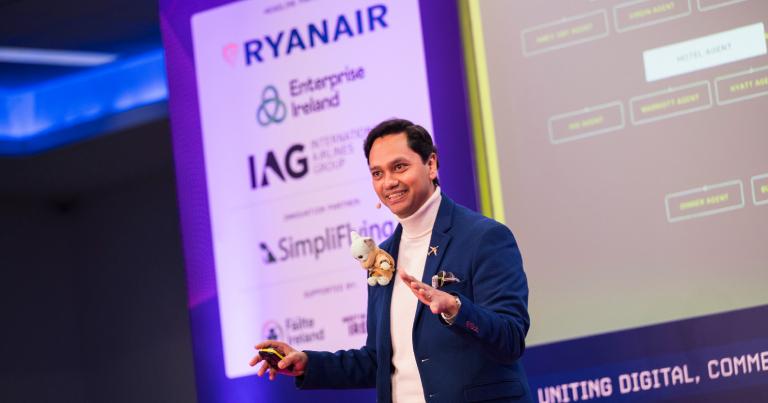
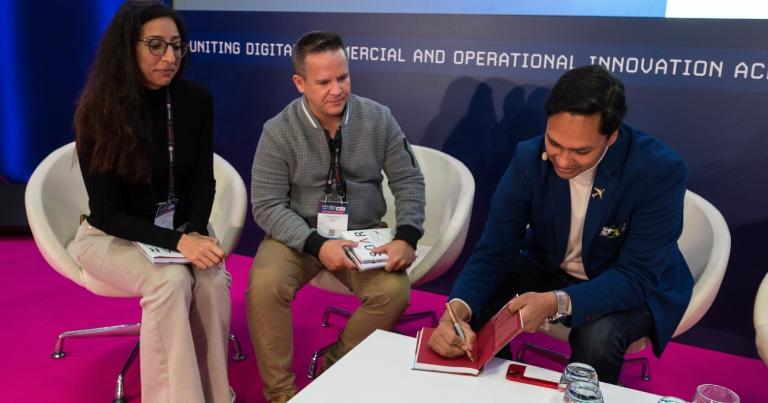
Nigam forewarned airlines that artificial intelligence (AI) will not merely enhance retailing. Instead, he argued it will determine which carriers reach travellers first, which offers earn attention, and which brands disappear before customers ever open an airline website. He framed agentic AI as the next decisive distribution shift for aviation, explaining that while the web once forced airlines to build digital storefronts and mobile phones later pushed carriers into the customers’ pockets, AI agents will act as customers themselves. They will search, compare, recommend, explain, and eventually transact on behalf of travellers. Nigam said the creation of this new distribution channel demands sharper product clarity and cleaner commercial architecture.
“When we started talking 10 years ago about the need for airlines to become retailers and to have offers and orders, we thought that would be the destination,” he explained. “What we realised is that this was just preparation for the age of AI.”
This insight shaped the keynote’s central argument, that airline retailing creates a runway for a world where AI agents will evaluate offers faster than humans and in doing so, will favour products that machines can understand, compare, and explain. Nigam inferred that complex fare rules, disconnected ancillaries, and unclear bundles will create commercial risk in this environment, whereas structured offers, transparent value, and order-based commerce will create opportunity.
Dr Joe Leader, Group CEO, APEX/FTE/IFSA, reinforced Nigam’s message as a pivotal moment for passenger experience and airline commerce: “Agentic AI will not reward airlines that merely digitised old complexity. It will reward airlines that made travel easier to understand, easier to compare, and easier to love.”
Preparing to retail via the AI channel
Nigam suggested that in order to succeed in selling through AI channels, airlines will have to offer more than just strong pricing. Instead, he said, they need to make clear why a fare or product is suited to the traveller. Why? Because AI will not operate like another display screen or booking path. It will act as an interpreter between traveller intent and airline inventory. A traveller may ask for the least stressful family trip, the most reliable connection, the best Premium Economy value, or the strongest loyalty redemption. The AI agent will translate that intent into options.
As such, AI agents will not reward vague fare families or buried benefits. They will need specific information about what each product includes, why it matters, how it improves the journey, and whether the airline can consistently deliver it. Content regarding seats, bags, lounge access, priority services, flexibility, loyalty value, airport products, onboard enhancements, and disruption support will need clear definitions and traveller-centred explanations.
AI agents will need to know not just what an airline sells, but what problem each product solves. For example, a flexible fare will need to explain peace of mind. A lounge pass will need to explain time saved and comfort gained. A family bundle will need to explain reduced friction. A premium seat will need to explain rest, productivity, or confidence.
After the keynote, Dr Leader added: “Passengers will not care which system created the answer. They will care whether the answer respected their time, their budget, their loyalty, and their journey.”
Airline economics create added urgency
Nigam went on to connect AI retailing to airline economics. One of his slides broke down how airlines make money, showing passenger revenue from Economy and Business Class alongside cargo and ancillary income. Another section of the visual mapped major cost categories, including fuel, crew, airport and navigation fees, aircraft ownership, maintenance, ground services, administration, and profit. The breakdown made retailing feel less abstract. It showed that airlines operate with thin margins, and small gains in conversion, productivity, servicing, and customer satisfaction can carry major financial impact.
To emphasise this point, Nigam then moved his presentation onto an ‘AI Mythbuster’ section that challenged a common aviation assumption. He compared the cost of an Airbus A350-1000’s fuel consumption to the cost of labour in terms of salaries and benefits as a percentage of revenue across U.S. airlines. The chart showed that labour costs accounted for between 25% and 45% of an airline’s total revenue, highlighting that any efficiency gains in service design, decision support, and airline cost structure will greatly benefit the industry.
“AI retailing will matter most when it helps airlines serve passengers better while strengthening the economics that make better service sustainable,” Dr Leader added after the keynote.
Travellers will bring their own agents
Nigam sharpened the future-facing nature of the keynote by focusing on the word “agents.” For decades, airline distribution revolved around travel agents, airline agents, and customer-service agents. Now, AI agents are entering the ecosystem with the ability to act for travellers across multiple categories. A traveller’s AI assistant could work across flights, hotels, car rentals, restaurants, activities, payment, loyalty, and airport services. This shift will move travel shopping from search results toward orchestration.
Nigam’s final image made that idea tangible. A slide titled ‘In an Agent-to-Agent future… Welcome Grogu!’ placed a consumer AI agent at the centre of a travel network. Around it sat flight agents, hotel agents, car rental agents, restaurant agents, and activities agents. Airline brands appeared within a broader ecosystem of travel providers. In that world, the traveller no longer searches alone. The traveller’s AI agent conducts the search, interprets options, negotiates trade-offs, and assembles a journey. He asserted that airlines will need to prepare their products for that environment now.
Adoption will move unevenly, then quickly
Nigam emphasised that AI-assisted travel search will not spread at one uniform speed. Inside the keynote room, he cited a live audience response showing that more than 90% of attendees had used AI for travel search. This figure was at odds with broader consumer adoption in markets such as France, Germany, and the UK, which remain closer to 20% based on existing third-party data.
This uneven rate of adoption creates a narrow window for airline preparation. Carriers may feel tempted to wait until mainstream adoption accelerates, yet Nigam advised that early behaviour can shape AI results, train customer expectations, and determine which content sources AI systems trust. Airlines that delay may discover that AI agents already prefer clearer offers from competitors, aggregators, or intermediaries.
Nigam also pointed out that airline content often already flows through aggregation companies, meaning AI agents may find airline products through third-party data pathways, wherein airlines have not shaped the surrounding experience. “The content is available from the content aggregation companies that already have all that content,” Nigam stated.
This presents a strategic challenge: Airlines must decide whether they will let others explain their value or whether they will supply rich, structured, accurate content that AI agents can use with confidence.
Complexity is now the enemy
Nigam’s keynote ultimately turned agentic AI into a directive for airline leaders to design retailing for a future where travellers delegate more of the search process to intelligent systems. To thrive in the AI era, they must simplify offers, structure their data, clarify the value and compete on intent.
He concluded that offers and orders are more than just modernisation tools. They form the commercial language that AI agents will use to understand airline products. Airlines that master that language will influence tomorrow’s recommendations. Airlines that ignore it may lose visibility before price, schedule, or brand can make their case. “Today, if you’re an airline, you have to be on that AI channel.”
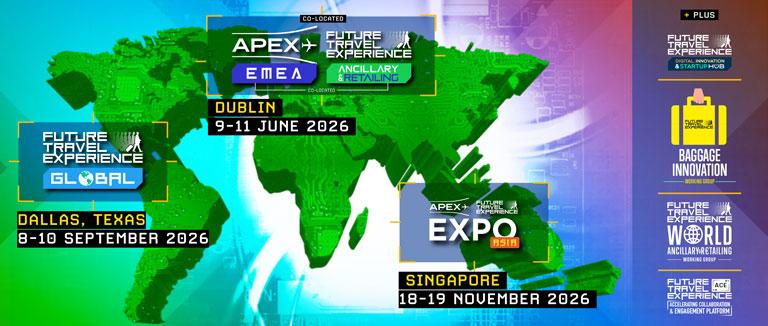
What’s next – FTE Global, Dallas, Texas, 8 to 10 September 2026, and APEX FTE EXPO Asia, Singapore, 18 to 19 November 2026
You may also be interested in
12 technology and CX trends that can enhance airline and airport operations in 2026
Article originally published here:
SimpliFlying Founder & CEO discusses how agentic AI will reshape airline retailing and determine which offers reach travellers
from Future Travel Experience https://ift.tt/AaviTSr
Comments
Post a Comment