Virgin Atlantic’s AI-powered vision for a passenger journey that is more personalised, operationally efficient and human
The following article was published by Future Travel Experience
Virgin Atlantic Chief Customer Officer (CMXO) & Executive Vice President Juha Jaervinen sets out a forward-looking vision for how artificial intelligence (AI) will reshape airline retailing and the end-to-end passenger experience.
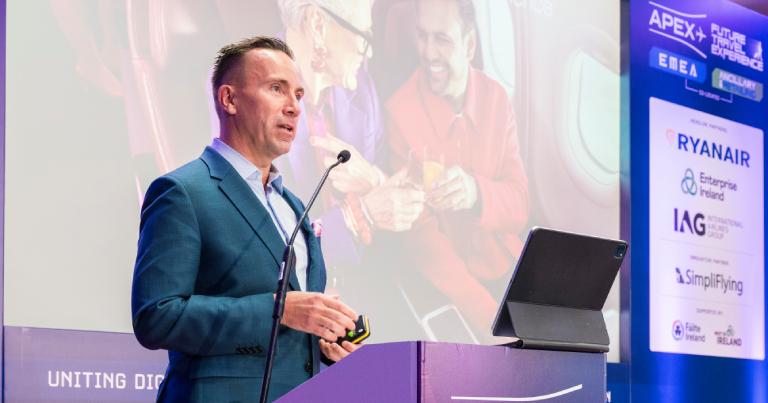
During his Opening Keynote at APEX FTE EMEA and Ancillary & Retailing 2026 in Dublin, Virgin Atlantic Chief Customer Officer (CMXO) & Executive Vice President Juha Jaervinen used his perspective as a serving member of the APEX Future Travel Experience Board for the last decade to present delegates with a vision of the future for how artificial intelligence (AI) will affect airline retailing, both in terms of booking flights but also selling and providing ancillaries before, during and after the journey.
At the outset of his presentation, Jaervinen framed the value proposition of AI as it pertains to both carrier and passenger. “AI should give passengers more control and airlines more precision,” he said. “The best outcome is not a more automated airline that feels colder; it is an airline where technology disappears into better timing, better recovery, better catering, better offers and better crew support. The future customer experience is not about selling more things. It is about knowing what matters, when it matters, and making the moment feel brilliantly different at scale.”
Jaervinen then went on to explore how AI can improve the passenger experience at a more granular level, from during the booking process to the inflight experience and even when they are faced with disruption.
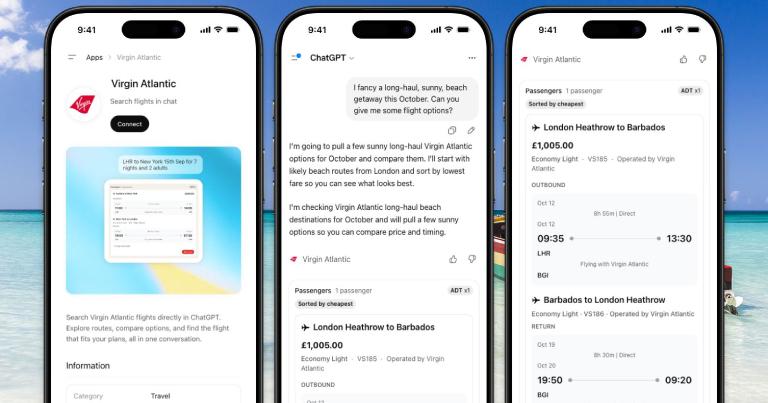
Booking: Airline value propositions must be clear and considered
Jaervinen began his forward-looking manifesto by highlighting how AI changes the economics of retailing. He noted the evolution away from “human shopping” and into “machine shopping,” explaining that “a human has attention limits. An AI agent does not. It can watch fares, rules, seat maps, loyalty value, disruption risk and competitor offers continuously.”
This ability for an AI agent to constantly monitor fares could also create additional revenue management pressure for airlines, Jaervinen added, as “in no change fee environments, the agent can watch after purchase and seek better economics if fare rules allow.”
To successfully adapt to this change in booking patterns, Jaervinen suggested airlines should provide offers that are clear, trusted, and machine readable, as this will cultivate a brand image that is understood as trustworthy by an AI agent as well as passengers. Once this transparent approach to ticket sales has been established, he said airlines can make a compelling ‘buy now’ limited time offer recommendation that is rational for the customer and the customer agent, because it reduces uncertainty for both parties. “This is where customer experience and retailing become the same conversation,” Jaervinen commented.
Inflight: Personalised offers should be executed with precision
Jaervinen believes making AI-powered offers to a passenger at the right time and via the right channel has manifold benefits for the airline, from increasing revenues to lessening crew workloads through to reducing fuel consumption.
Regarding the financial opportunity presented by personalisation, he referenced a survey from GlobalData showing that Gen Z is the generation most likely to view tailoring as an essential purchase factor, along with millennials.
Moving on to food & beverage, he stated: “APEX believes airlines can make premium items available across cabins when they are reserved in advance and catered with certainty, but the no show point matters. If an airline has purchased, chilled, loaded and carried a perishable item, the customer should understand that the item may not be refundable unless they bought protection or the airline caused the disruption. The customer value is confidence. The airline value is revenue with lower waste and better provisioning.”
This approach would help with airlines’ missions to carry out smarter loading in a bid to reduce catering waste, which currently stands “in the high teens to low twenties” in terms of percentage points.
AI will further advance the fight against cabin waste by enabling loading catering according to a variety of factors including “route, departure time, holiday periods, religious observances, local events, loyalty preferences and more.”
Elsewhere, while Jaervinen acknowledged airlines worry that a ‘dine on demand’ approach to catering will result in more work for crewmembers, he countered, “If passengers can reserve what they want and trust that it will be available later, they do not all need to eat immediately after take-off.”
One way to manage the transition would be to offer guided service windows, Jaervinen opined. The benefit? The service peak is smoother, meaning crews stay more engaged with customers.
Finally, once cabins become connected, just as Virgin Atlantic will be on completing its Starlink rollout by 2027, Jaervinen said this paves the way for airlines to serve passengers a range of offers spanning transfers, destination experiences, lounge access, home delivery retail, premium food and beverage, and more.
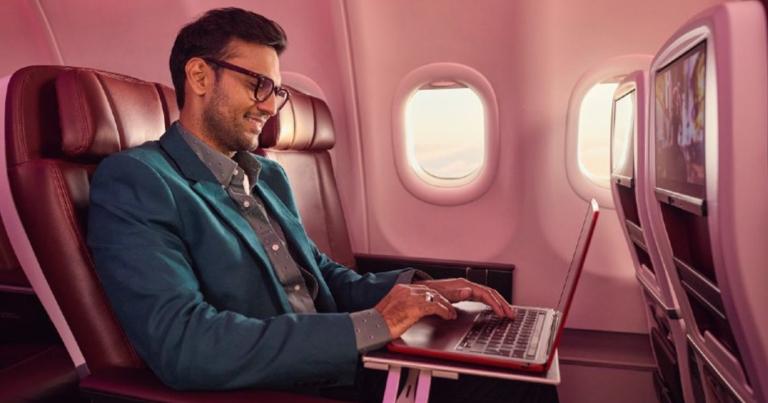
Disruptions: Recovery as retailing
Jaervinen identified disruption management as intrinsically connected to retailing: “If a traveller bought a meal, a transfer, a lounge pass, a bag service or a destination activity, the airline needs to know what happens when the flight changes. AI can help present choices, reattach ancillary purchases, and suggest fair service recovery. This is a place where airlines can build enormous trust. The best use of AI is proactive recovery with human empathy when the customer needs it.”
From an Airline Passenger Experience Association (APEX) perspective, Jaervinen suggested that airlines should offer service recovery in line with the severity of the disruption. Specifically, he said they could offer a range of recovery options for the affected passenger to choose from, whether it is the fastest option, simplest option, or another flight in the same cabin.
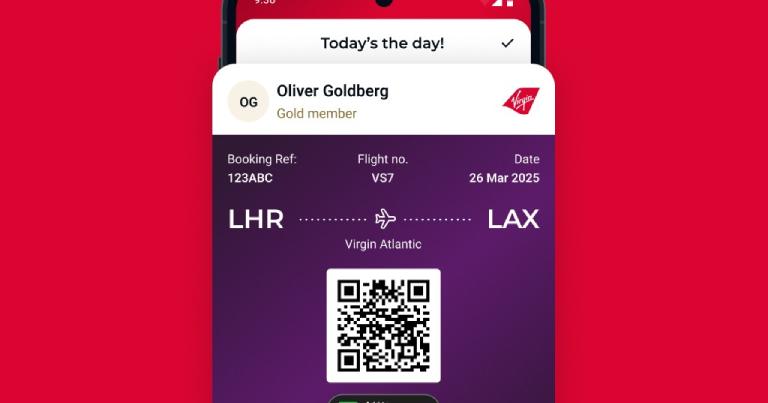
Connected to the idea of disruption and recovery is the ability for airlines to offer passengers one trusted journey on their phones, Jaervinen told the audience, which includes information about their identity, wallet, loyalty, bags and trip servicing. “IATA passenger research points to strong customer interest in smartphone-based identity and real time bag tracking,” he said. “This allows the airline to know what was promised, what was purchased, what changed, and what should happen next.”
AI enables airline employees to perform better
Jaervinen rounded off his keynote with the recognition that “AI and state-of-the-art tech will revolutionise how we work, plan, operate and serve customers. It unlocks revenue opportunities while improving the experience and it will undoubtedly shape the next decade and beyond.”
He confirmed that Virgin Atlantic will absolutely be taking advantage of AI but concluded that only people and human-designed experiences can make you feel something, which no AI can copy. “Technology should remove effort so people can create emotion: a handwritten welcome note; a cold Redhead cocktail waiting in the Clubhouse; your favourite seat on the plane reserved.”
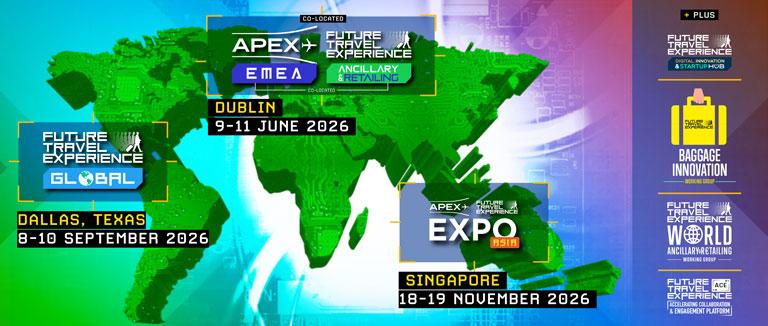
What’s next – FTE Global, Dallas, Texas, 8 to 10 September 2026, and APEX FTE EXPO Asia, Singapore, 18 to 19 November 2026
You may also be interested in
12 technology and CX trends that can enhance airline and airport operations in 2026
FTE launches new podcast to explore the realities of successful innovation
Article originally published here:
Virgin Atlantic’s AI-powered vision for a passenger journey that is more personalised, operationally efficient and human
from Future Travel Experience https://ift.tt/org5mjv
Comments
Post a Comment